Showing posts with label maryland. Show all posts

February 15, 2018

Maryland May Again Accelerate Its RPS: 100 Percent Renewable Energy by 2035


On Feb. 1, Delegate Shane Robinson along with over forty co-sponsors and advocacy groups introduced the 100% Clean Renewable Energy Equity Act of 2018 calling for 100 percent renewable energy in Maryland by 2035. The bill’s introduction follows similar resolutions in 2017 by Maryland’s Montgomery County and the U.S. Conference of Mayors.

The bill would again accelerate Mayland’s Renewable Portfolio Standard (RPS) — the percentage of Maryland’s electricity supply generated from renewable sources — from a bill during last year’s session that accelerated the RPS from 20 percent in 2022 to 25 percent in 2020.

May 18, 2017

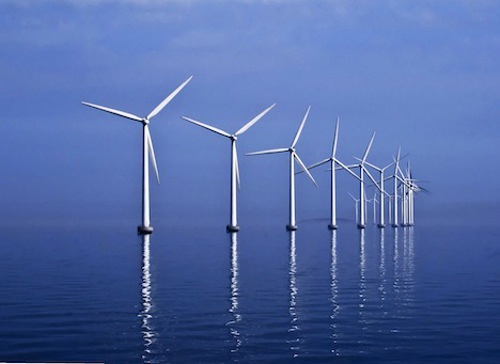
Maryland Awards Renewable Energy Credits to Two Offshore Wind Projects

The Maryland Public Service Commission (PSC), in a May 11 decision, awarded offshore wind renewable energy credits (OREC) to two projects to be built off the coast of Maryland.

The decision will allow U.S. Wind and Skipjack Offshore Energy to construct 368 MW of capacity.

“The approval today of the nation’s first large-scale offshore wind projects bring to fruition the General Assembly’s efforts to establish Maryland as a regional hub for this burgeoning industry,” Kevin Hughes, PSC Chairman, said in a statement. “We have taken great care to ensure that this decision maximizes economic and environmental benefits to the state while minimizing costs to Maryland ratepayers.”

April 27, 2017

Maryland’s Energy Storage Tax Credit: Gaining Momentum Across America?

The General Assembly of Maryland just passed a bill that would provide a 30 percent tax credit to those who chose to utilize energy storage technology, making it the first state in the country to pass such legislation. The funds provided by the bill would last from 2018 to 2022.

The bill includes a cap of $5,000 for residential storage projects, while for commercial projects, the cap is set at $75,000. The state government has allocated a total of $750,000 per year to be used in credits.

February 17, 2017

After Veto Override, Renewable Energy Sourcing Accelerates in Maryland

State lawmakers voted overwhelmingly Thursday to override Gov. Larry Hogan's veto of a bill to increase the use of renewable energy in the state.

The legislation, which will require utility companies in Maryland to buy more energy from sources such as wind turbines, solar panels and hydroelectric dams, became law when the Democratic-controlled General Assembly voted to override the Republican governor.

Hogan and GOP lawmakers objected to the cost to consumers. The requirement is expected to make electricity more expensive, but it's not clear by how much.

February 5, 2017

Maryland House Overrides Governor to Push Renewable Energy

Senate next to vote on measure vetoed last year, which would increase goals for solar, wind, other clean power sources

Maryland’s House of Delegates on Tuesday overrode Gov. Larry Hogan’s veto of legislation that would push the state to get more of its energy from renewable sources.

The 88 to 51 vote split along party lines, with Democratic lawmakers providing more than enough votes for the three-fifths majority needed to override the Republican governor’s veto. 

January 31, 2017

Maryland Senate to Try Veto Override on Renewable Energy

The Maryland Senate is scheduled to try to override Gov. Larry Hogan's veto of a measure to boost the state's renewable energy standards.

The Senate is set to vote Thursday.

It would take a three-fifths vote, or 29 of 47 senators, to override the veto. Last year, senators voted 32-14 along party lines for the measure.

If the Senate overrides the veto, the House of Delegates would still need to override it before the measure could become law.

June 26, 2016

Maryland PSC Approves Final Community Solar Regulations

Maryland could soon be one of only 11 US states with community solar programs, as the state’s Public Service Commission has just approved its final regulations for establishing a three-year pilot community solar program, which are expected to be published in the coming weeks and become final in mid-July.

By allowing more residents, especially low and moderate income residents, as well as those without ownership of their roofs or who live in multi-unit buildings, to participate in the solar energy revolution, Maryland’s community solar program could enable a more inclusive renewable energy ecosystem in the state. Part of the new community solar regulations speak directly to that inclusiveness, with about 30% (60 MW) of the state’s community solar cap (200 MW) being set aside for low to moderate income residents.

June 6, 2016

Maryland Governor Vetoes Renewable Energy Bill

On Friday, Gov. Larry Hogan, R-Md., vetoed the Clean Energy Jobs Act, a bill that would have expanded Maryland’s renewable portfolio standard (RPS). Before the 2016 Maryland legislative session adjourned in April, state lawmakers had finalized the bill and sent it to Hogan for consideration.

Specifically, the legislation would have boosted the current RPS from 20% by 2022 (with a 2% solar carve-out) to 25% by 2020 (with a 2.5% solar carve-out). According to estimations from the Maryland Climate Coalition, the accelerated target would have resulted in approximately 1.3 GW more of clean energy and hundreds of new jobs. Among other provisions, the bill also would have established a working group to explore ways to help with clean energy job training.

March 28, 2016

On the Bay: House Approves Clean Energy in MD

The Clean Energy Jobs Act, which aims to increase the state's reliance on solar and wind power, passed in the House of Delegates on Monday.

The bill will ensure the state gets 25 percent of its electricity from renewable sources by 2020, according to the Maryland Climate Coalition. Passed 92-43, the bill increases an earlier goal of 20 percent by 2022.

May 27, 2015

Maryland Governor Signs Community Solar Bill

Maryland is looking to increase their solar presence with a new bill that will allow construction of community solar projects through a three-year pilot program. The bill -- House Bill (HB) 1087 -- was signed by Gov. Hogan this week.


HB 1087 requires the community solar projects to be regulated under the Public Service Commission (PSC), who will also provide the structure of the program -- which includes generation of electricity and allocation of costs to subscribers.

"This pilot program is a key component to our industry's goal of increasing access to solar energy," said Rick Peters, Maryland-DC-Virginia Solar Energy Industries Association (MDV-SEIA) board president and CEO of Solar Energy Services. "In an increasingly bipartisan fashion, Maryland legislators continue to lead on renewable energy policy -- creating jobs and opportunity for Marylanders."

April 27, 2015

Community Solar Bill Puts Maryland at Forefront of Renewable Energy Policy

This week, the Maryland General Assembly took a key step forward to allow more Marylanders than ever to access solar energy by passing community solar legislation. Community solar projects allow multiple people to subscribe to one solar energy project and offset a portion of their electric bill from the energy generated through a credit.

Community solar is important because approximately 80 percent of Marylanders are currently unable to choose solar energy, either because they have shaded roofs, are renters, can’t afford a full system or don’t have access to their roof. 

May 20, 2014

Mills, Environmentalists Debate Energy Credits for Black Liquor in Maryland

Environmentalists will seek to free up state funds for renewable energy resources by excluding “black liquor” from the list of renewable energy sources eligible for state subsidies, after an effort to do so failed this year.

House Bill 747, which failed in committee during this year’s General Assembly, would have changed the state’s renewable energy portfolio standard to no longer treat the burning of black liquor — a byproduct of the papermaking process that can be burned to produce energy — as a renewable energy source eligible for state funding.

Luke Mill in Western Maryland is the only in-state facility that burns black liquor for energy, but it isn’t the only one that receives funding through Maryland’s portfolio standard, said James McGarry, chief policy analyst for the Chesapeake Climate Action Network.

Energy companies in other states on the same power grid as Maryland — PJM Interconnection provides electricity to 13 states, including Maryland and Washington, D.C. — are eligible for state subsidies. McGarry said the Johnsonburg Mill in Pennsylvania is applying and he expects it to get funding.

Rich Reis, energy committee chair for the Maryland chapter of the Sierra Club, said he wants energy sources that involve the burning of materials to be excluded from state subsidies through the portfolio standard.

By burning black liquor, greenhouse gases are released into the air, although to a much less damaging extent than those emitted through the burning of fossil fuels such as coal. McGarry said he would rather see the portfolio standard money spent on other renewable energy sources, such as solar and wind energy.

“It’s one of the top things that Maryland has to do to achieve its greenhouse gas goals,” McGarry said. “As long as our energy law is broken, we’ll try to fix it.”

Delegate John Olszewski (D-Baltimore County), sponsor of the House bill, said that in 2011, 45 percent of renewable energy subsidies from the state went to black liquor facilities, including Luke Mill.

But in 2013, McGarry said, that number dropped to 26 percent as wind energy increased — from 14 percent in 2011 to 39 percent in 2013.

Mill byproducts such as black liquor will produce the same emissions regardless of whether they are burned for energy, incinerated or left to decay in a landfill or elsewhere, according to a 2011 Environmental Protection Agency report.

Facilities such as Luke Mill aim to harness the black liquor before it releases greenhouse gases without being used to generate energy, said Jessica McFaul, press secretary for the American Forest & Paper Association.
According to a National Council for Air and Stream Improvement report released in October, the use of black liquor prevents a significant amount of emissions of greenhouse gases that would occur if fossil fuels were burned instead.

Maryland’s Greenhouse Gas Reduction Act Plan, released in October, found that diverting portfolio standard funds from black liquor to wind energy would reduce greenhouse gas emissions by 1.4 million metric tons. McGarry said the jury’s out on exactly how the burning of black liquor for energy production contributes to greenhouse gas emissions.

It makes sense for facilities such as Luke Mill to continue using black liquor to generate energy, McGarry said, but it doesn’t make sense to reward companies that have used black liquor for decades. There’s no issue with burning black liquor for energy production, so state funds would be better spent on other, newer renewable energy sources, he said.

McFaul wrote in an email that she could not comment on whether Luke Mill would have had to cut jobs if it lost the funding it receives from the portfolio standard.

The bill would have compensated Luke Mill for losing portfolio standard funds, however, because it is an in-state facility, Olszewski said.

The Sierra Club hasn’t decided how it will approach the portfolio standard’s classification of black liquor next year, Reis said. There should be a similar bill next session, Olszewski said, and he doesn’t expect environmental groups to drop the issue. McGarry said the issue isn’t going away.


November 24, 2013

Maryland County Requires Buildings to Install Renewable Energy

A Maryland county has passed a precedent-setting clean energy bill - it could be the first in the US to require all government buildings to run on renewable energy.

That is, when a county building is renovated (50% or more of gross floor area) or newly built, renewable energy must be integrated into the design. 

August 1, 2013

O'Malley crafts stricter plan to fight climate change in Maryland

Maryland must cut electricity consumption, use more renewable energy to cut carbon emissions.

The O'Malley administration's aggressive new plan to fight climate change calls for Maryland residents to further cut their energy use or face higher monthly utility bills.

The plan, to be released Thursday by Gov. Martin O'Malley, also requires that more of the state's electricity come from renewable sources by 2020.


February 19, 2012

Maryland gov lobbies lawmakers for offshore wind

Maryland's governor lobbied lawmakers personally Tuesday for one of the key pieces of his environmental agenda, a reworked offshore wind power bill modeled on a New Jersey law.

The bill follows one that was killed the year before by lawmakers over concerns about costs. That bill would have mandated utilities enter long-term contracts with offshore wind power producers. The current bill establishes requirements for offshore wind power production, but does not require mandatory contracts.

December 20, 2011

Maryland: Offshore wind debate set to continue

Maryland lawmakers are preparing to resume debate on one of Gov. Martin O'Malley's major green initiatives, an offshore wind energy bill that stalled during the last legislative session amid concerns about the cost to utility companies and their customers.

The bill would have subsidized the construction of between 80 and 200 wind turbines 12 miles off the coast of Ocean City by obligating the state's four investor-owned utilities -- Baltimore Gas and Electric Co., Allegheny Power, Delmarva Power and Pepco -- to buy offshore wind energy for 25 years.

November 4, 2011

Maryland climate plan passes key tests in UMD studies

Maryland's plan to cut greenhouse gas emissions 25 percent by 2020 meets a series of benchmark tests set by state lawmakers, concludes a new pair of studies by the University of Maryland Center for Integrative Environmental Research (CIER). The findings should help clear the way for adoption of a full Climate Action Plan next year, the researchers say.

Maryland's 2009 Greenhouse Gas Reduction Act ordered independent studies to make sure that its provisions won't hurt the reliability of the state's electricity supply or damage the manufacturing sector of the economy. The CIER studies give State plans a passing grade on these scores and project some upsides:

May 24, 2010

Maryland governor signs bill raising utilities' solar energy requirements

Maryland's Gov. Martin O'Malley has signed into law a bill that raises the amount of solar electricity utilities must purchase within a certain time period to comply with legal requirements.