Showing posts with label ghg. Show all posts

November 27, 2012

UK Lawmakers Reach 'Landmark Deal' On Renewable Energy Support

After months of haggling over the costs related to subsidizing renewable energy, the UK Energy and Finance ministries have hammered out an agreement that will triple the nation's support for clean energy.

The policy is expected to boost the share of renewables in the UK to 30% of the energy mix by 2020 - much higher than the 20% European Union target - creating thousands of green jobs in the process.

Britain's current target is mostly for wind - 31 gigawatts of planned offshore and onshore wind - which would bring renewables to 11% of the energy mix by 2020. Many worried that target would be unachievable with big subsidy cuts.

March 13, 2012

Canada Aligning Its Climate Change Policy with the U.S.

Take-aways from The Energy Bar Association's February Meeting
By: Jay Tufano
Cleantech Law Partners

The Energy Bar Association’s (EBA) held its Western Chapter Meeting on February 23rd and 24th in San Francisco. The EBA assembled a diverse and distinguished group of speakers representing utilities, technology providers, international partners, and public utility commissioners. Cassie Doyle, Consulate General of Canada, presented an overview Canada’s energy policy highlighting its long-standing energy and trade partnership with the United States. Although Ms. Doyle’s presentation focused on Canada, it underscored the reverberating effects of the U.S.’s failure to adopt a comprehensive renewable energy and climate change policy.

November 3, 2011

Northern Ireland urged to set binding carbon targets


The Committee on Climate Change (CCC) has urged Northern Ireland's environment minister to set emission reduction targets and establish a set of policies designed to cut greenhouse gas emissions by 25 per cent by 2020.

The CCC has today published a report, commissioned by Northern Ireland's environment minister, which recommends that the country's executive government enacts its own climate change legislation, including setting legally binding emissions targets.

August 23, 2011

Poland to up the ante on energy law

The European Commission has launched legal action against Poland after the government failed to pass a law on renewable energy.

Under EU regulations, 15 percent of Poland’s energy is to originate from sustainable sources and the law on renewable energy should have been passed by December last year.

May 18, 2011

New clean energy incentives on the horizon?

Hoping to find a way around the current political impasse on climate change and energy policy, a former top adviser to President Obama has devised a policy proposal to drive down greenhouse gas emissions from the utility industry over the next 20 years.

The plan, “Promoting Clean Energy in the American Power Sector,” borrows from a range of policy proposals, including President Obama’s latest clean energy policy, the cap and trade plan that foundered in Congress last year, and state-level clean electricity mandates. The proposal sets goals based on emissions intensity — the amount of carbon dioxide emitted per unit of electricity generated — an idea pursued both by the Chinese government and by former President George W. Bush.

May 5, 2011

Koch brothers' influence extends again to poor climate policy

New Jersey Governor Chris Christie is re-evaluating the state's participation in a regional carbon trading program and could opt to withdraw within a few weeks.

Observers say the move is expected in response to pressure from GOP legislators and campaigns mounted by groups funded by billionaires Charles G. and David H. Koch.

March 25, 2011

Positive growth in the clean energy industry, while nuclear future remains unsure

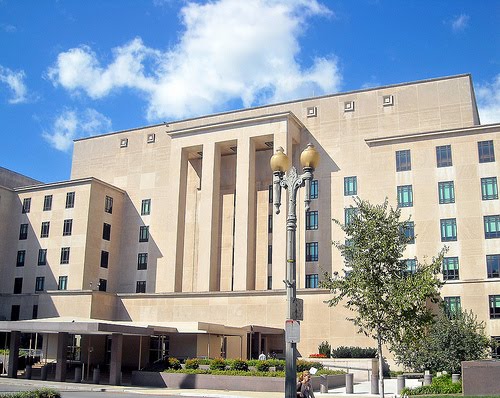
Good news for the clean energy industry -- the U.S. State Department announced today it plans to cut its GHG emissions by 30% (from 2008 levels) within the next year. This goal is particularly ambitious as compared to U.S. commitment to reduce its emissions 17% by 2020 in the United Nation's Copenhagen Accord. The Department hopes to serve as a model to other agencies, demonstrating a cost effective partnership between the public and private sector which will spur job growth in the clean energy industry. The patnership is with Constellation Energy, which currently plans into a tapping a $50 million solar project in New Jersey to provide the Department's power.

March 22, 2011

CA groundbreaking climate law put on hold

A San Francisco superior court judge has put California's sweeping plan to curb greenhouse gas pollution on hold, saying the state did not adequately evaluate alternatives to its cap-and-trade program.

In a 35-page decision, Judge Ernest H. Goldsmith said the Air Resources Board had failed to consider public comments on the proposed measures before adopting the plan, which affects a broad swath of the state's economy.

February 14, 2011

NH battle over GHG emissions continues

In a sign of the significant political shift at the State House, three Republican-backed bills filed this legislative session would repeal or significantly alter three major renewable energy initiatives the former Democratic-controlled Legislature passed beginning in 2007.

January 16, 2011

EPA regulations for biomass on hold

The Environmental Protection Agency (EPA) announced January 12, 2011 that it plans a three-year delay in regulating wood-fired power plants and other “biomass” incinerators under Clean Air Act provisions reducing greenhouse gases pending future consideration of the science and a subsequent rulemaking. The EPA is granting the three-year exemption despite the existing and very plain science that burning of trees and other wood products increases global warming pollution.

October 20, 2009

Courts begining to allow climate nuisance cases

Pressure from the judiciary to act in response to the threat of climate change continues as the 5th Circuit releases an opinion that opens the court doors to climate nuisance cases. Comer v. Murphy Oil USA, No. 07-60756 (5th Cir. Oct. 16, 2009). The panel of judges partially reversed a dismissal of a tort class action, under Mississippi law, alleging trespass, nuisance and negligence in relation to the emission of greenhouse gasses. The plaintiffs in the case filed suit against various energy, fossil fuel and chemical industry companies for damages to property stemming from rising sea levels and the ferocity of Hurricane Katrina, which the plaintiffs alleged was caused by the release of greenhouse gases ("GHGs").

The claim was originally dismissed by the District Court on the grounds that the case lacked standing and was not justiciable. However, the 5th Circuit’s reversal signals that plaintiffs now have standing to raise at least three common law claims (nuisance, trespass, negligence) for GHG emmisions, and that the claims are likely justiciable. The Judges held that the plaintiffs “allegations of a causal link between greenhouse gas emissions, global warming, and the destruction of the plaintiffs' property by rising sea levels and the added ferocity of Hurricane Katrina” provide enough evidence to satisfy the “fairly traceable” standard needed to satisfy standing requirements.

Furthermore, with regard to the justiciability question, the 5th Circuit analogized the claims to previous tort actions and called out the fact that no federal body has regulated greenhouse gas releases. “[Plaintiff’s claims] are justiciable because they plainly have not been committed by the Constitution or federal laws or regulations to Congress or the president. There is no federal constitutional or statutory provision making such a commitment, and the defendants do not point to any provision that has such effect.” The 5th Circuit also specifically mentioned that they were taking the 2nd Circuit’s lead provided by the recent Connecticut v. AEP decision to allow the case to proceed. However, the 5th Circuit found that plaintiff’s unjust enrichment, fraudulent misrepresentation, and civil conspiracy claims do not satisfy federal standing requirements, because they are generalized grievances.

In the 9th Circuit, a native Alaskan tribe claimed that they will be forced to relocate their village because of climate change effects caused by GHG by 24 energy utilities.  The case was dismissed on standing and justiciability grounds. Native Village of Kivalina v. ExxonMobil Corp., No. C 08-1138 (N.D. Cal. Sept. 30, 2009). An appeal of the case to the 9th Circuit is likely, and in the event that the Court follow the 2nd and 5th Circuit, a strong precedent would be set to establish firm jurisprudence grounds for allowing such claims across the country.

These decision show that if Congress doesn't take action to price the true cost of climate change, then the judiciary will step in and a jury to do it for them. Pressure from the courts will not only push law makers to act, but also provide an incentive for polluters to support climate change regulation. From the polluter’s perspective it is likely better to have such a regulatory system than have the potentially harsh open proceedings with damage calculations coming from a local court.

October 8, 2009

EPA proposes new rules under CAA to reduce GHGs

Last week, EPA announced a proposal that is focused on large facilities emitting over 25,000 tons of greenhouse gases a year. These facilities would be required to obtain permits that would demonstrate they are using the best practices and technologies to minimize GHG emissions.

The rule proposes new thresholds for greenhouse gas emissions (GHG) that define when Clean Air Act (CAA) permits under the New Source Review (NSR) and title V operating permits programs would be required for new or existing industrial facilities.

The proposed thresholds would “tailor” the permit programs to limit which facilities would be required to obtain NSR and title V permits and would cover nearly 70 percent of the national GHG emissions that come from stationary sources, including those from the nation’s largest emitters—including power plants, refineries, and cement production facilities.

Small farms, restaurants and many other types of small facilities would not be subject to these permitting programs.

Under the proposed emissions thresholds, EPA estimates that 400 new sources and modifications would be subject to PSD review each year for GHG emissions. Less than 100 of these would be newly subject to PSD. In total, approximately 14,000 large sources would need to obtain operating permits for GHG emissions under the operating permits program. About 3,000 of these sources would be newly subject to CAA operating permit requirements as a result of this action. The majority of these sources are expected to be municipal solid waste landfills.