Showing posts with label nuclear. Show all posts

March 9, 2017

California Is Considering a 100 Percent Renewable Energy Law. That’s a Bad Idea.

By choosing renewables alone, the state may be closing off other decarbonization pathways.

Last week, California’s quest for a clean grid revolution culminated in the introduction of a bill mandating 100 percent renewable energy by 2045.

Senator Kevin de León, a longtime environmental leader in the state senate, wrote the measure, which comes on the heels of last year’s major greenhouse gas reduction bill. Massachusetts legislators introduced the same goal with a deadline of 2035.

December 20, 2012

Energy Bill means a new sunrise for renewable energy

A new Energy Bill, two years in the making, will triple investment in renewable energy and mean the end for coal-powered generation.

The Bill commits the government to supporting low carbon electricity to the tune of £7.6bn by 2020, over three times the current level of £2.3bn for 2012-13.

The Carbon Capture and Storage Association, the Nuclear Industry Association and RenewableUK welcomed the introduction of the Bill, saying it "would help to unlock billions in investment in low carbon generation, enable the UK to meet its energy security and climate change targets, and create thousands of jobs"

December 11, 2012

The energy bill: what’s the real cost?

Before the end of this month, the Coalition will publish a new Energy Bill, which sets out its strategy for UK ‘energy futures’. Paul Dorfman has an idea who is likely to reap the highest benefits and guess what? It's not you or me ...

The Department of Energy and Climate Change (DECC) has been relentlessly optimistic about its Electricity Market Reform plans for the Energy Bill, despite strong and sustained criticism from a scientific advisory Committee on Climate Change, a Parliamentary Select Committee on Energy, and more recently, a House of Lords Working Group who have all concluded that the reforms are ‘unworkable’.

December 6, 2012

UK energy deal triples renewable subsidy by 2020

British government support for low-carbon electricity generation will triple by 2020 after the energy and finance ministries reached a deal to end months of wrangling over costly reforms.

The move is expected to boost the share of renewables in Britain's energy mix to 30 percent by 2020, outpacing European Union targets of 20 percent, while creating tens of thousands of new jobs.

December 5, 2012

Energy Bill introduced to UK parliament

Described as a “once in a generation opportunity” to drive low-carbon economic growth by Energy Secretary, Ed Davey, the Energy Bill has been introduced to parliament today after repeated delays.

In a statement to the House of Commons, Davey said: “The Energy Bill will attract investment to bring about a transformation of our electricity market, moving from predominantly a fossil-fuel to a diverse low-carbon generation mix.”

October 12, 2012

Germany must change its RE legislation to curb power price : RWE

Germany must change its renewable- energy legislation to curb power-price gains and guarantee security of supply, according to utility RWE AG (RWE) and European Union Energy Commissioner Guenther Oettinger.

Consumers can’t withstand more increases in electricity costs caused by the so-called EEG subsidy system, RWE Chief Executive Officer Peter Terium said today at a conference in Cologne. The system will also be unable to ensure supply security in the long term, he said.

June 6, 2012

UK policy will fail to reach carbon targets, says IEA

The U.K.’s energy policies may fail to deliver nuclear power and renewables needed for the nation to meet its goals for reducing greenhouse gases, the International Energy Agency said. 

Britain’s new electricity generation capacity is coming mainly from natural gas fired plants, the Paris-based agency, which advises 28 nations, said today in a report. The government should spur an “efficient mix of new, cleaner generation, more efficient use of existing infrastructure and more flexible demand,” the IEA said.

June 5, 2012

Jordan's parliament adopts energy efficiency law

Arwa reported on last week’s parliamentary vote to shelve Jordan’s first nuclear reactor. Exploratory mining for uranium was also stopped. The program will surely resurrect once new feasibility analyses are complete, but against a backdrop of a pressurized economy, scarce water sources and corruption investigations, success is anyone’s guess.

The time is now for Jordan’s renewable proponents to demonstrate the viability of alternative energy. Take a page from regional legend David and Goliath, and slay the nuclear beast.

March 10, 2012

Bingaman launches uphill battle with 'clean' power proposal


Senate Energy and Natural Resources Committee Chairman Jeff Bingaman (D-N.M.) floated highly anticipated legislation Thursday to reduce power plant pollution by mandating greater use of low-carbon energy sources.

The legislation, known as the Clean Energy Standard Act of 2012, faces major hurdles in Congress, but will likely serve as a rallying cry for Democrats and renewable energy groups, which suffered a brutal defeat when climate legislation collapsed in the Senate in 2010.

March 7, 2012

Legislation introduced for National Clean Energy Standard


Legislation introduced this morning would set the first national standard for clean energy in the US.

Senate Energy and Natural Resources Committee Chair Jeff Bingaman (D-NM) introduced the Clean Energy Standard Act of 2012, which would require utilities to source a set percentage of their energy from "clean" sources.  Although the kinds of energy defined as "clean" are much broader than Renewable Energy Standards, in place in 29 states, the legislation has little chance of passing the GOP-dominated House. Included in "clean" energy are renewables, nuclear, natural gas and clean coal.

March 3, 2012

ESA applauds bipartisan Gibson-Thompson Bill to create energy storage ITC


The Electricity Storage Association (ESA) applauded news this week that U.S. Reps. Chris Gibson (R-NY) and Mike Thompson (D-CA) introduced legislation that would create an investment tax credit (ITC) for energy storage technologies of all types and help jumpstart an industry that has enormous potential to increase the reliability, security, and efficiency of the nation's electric grid.  The Storage Technology for Renewable and Green Energy Act (STORAGE) Act (H.R. 4096) is the House companion legislation to S. 1845, introduced by Sens. Ron Wyden (D-OR), Jeff Bingaman (D-NM), and Susan Collins (R-ME). 
"We are delighted that Rep. Chris Gibson, who has championed energy initiatives and transmission issues in his Congressional district, and Rep. Mike Thompson, a staunch supporter of clean energy technologies, understand the value of energy security and have taken such a strong interest in energy storage," said Brad Roberts, Executive Director of the ESA. "Energy storage technologies help all resources – whether renewable, natural gas, coal, or nuclear – run more smoothly. Our innovations have been tested on the grid and proven to be of enormous benefit; this tax credit will help developers secure private sector equity and debt financing for their projects."

February 24, 2012

Utah: Bill seeks up to 75 percent tax credit for alternative energy


A Utah Senate committee approved a bill Friday that would specify state tax credits for alternative-energy producers and shift the program to the new Office of Energy Development.

SB65, sponsored by Sen. Stuart Adams, R-Layton, would award credits starting at 20 percent and going up to 75 percent for 20 to 30 years, depending on the duration of a project’s energy production. It would apply to everything from renewables to oil shale, tar sands and nuclear.

February 10, 2012

Ohio: Jordan wants to scrap energy benchmarks

State Sen. Kris Jordan, R- Powell, testified last week on a proposal to eliminate benchmarks designed to encourage the use of alternative energy in Ohio.

His proposed legislation would repeal Ohio's Alternative Energy Portfolio Standard, which requires 25 percent of the state's energy to come from advanced and renewable resources by 2025.

December 23, 2011

Japanese Energy Policy After Fukushima

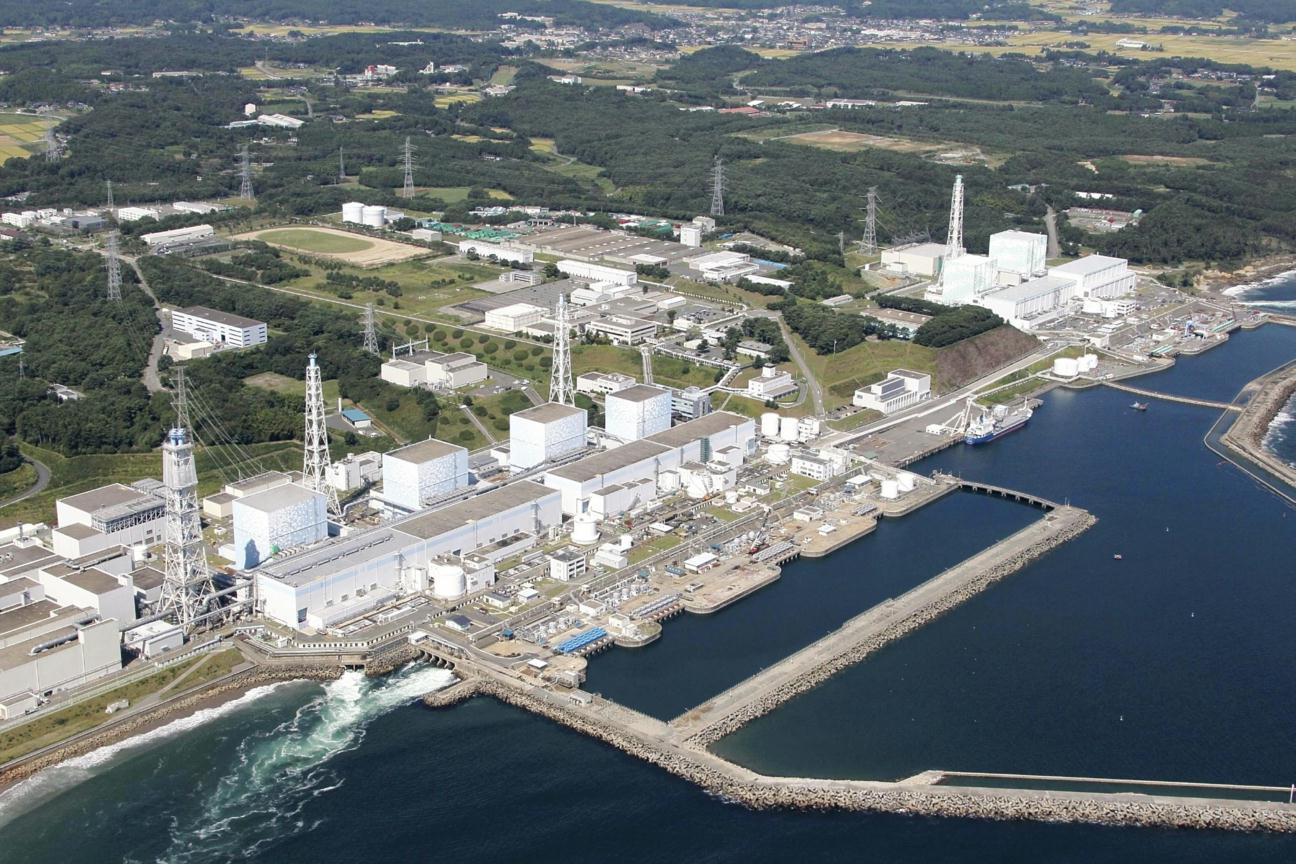
On December 16, 2011, the government announced that the crippled Fukushima No. 1 nuclear power plant finally achieved a state of "cold shutdown" following the world's worst nuclear accident since Chernobyl. It marked the latest in a series of energy-related developments since the "Great East Japan Earthquake" shook northeastern Japan on March 11, leaving in its wake thousands dead, vast property destruction, and a destabilized nuclear power plant owned and operated by Tokyo Electric Power Corp.

December 16, 2011

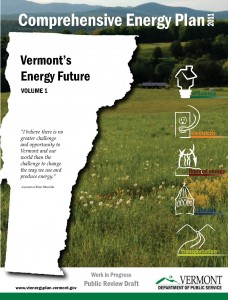
Vermont: Shumlin releases final, “scrubbed” version of Comprehensive Energy Plan

It’s official.

Vermont’s Comprehensive Energy Plan is final. But that’s just the beginning. With the official goal of meeting 90 percent of the states energy needs from renewable sources by mid-century, meeting that ambitious target is the hard part.

The state currently receives about 25 percent of its energy from renewable sources. Despite a legislative mandate, it has been more than a decade since the state produced a comprehensive energy plan. Now, three months, thousands of comments and more than 18 meetings later, the final version is out.

November 21, 2011

USA: Bipartisan tax credit would open market for energy storage

The Electricity Storage Association (ESA) applauds Senators Ron Wyden (D-OR), Susan Collins (R-ME) and Senate Energy Chairman Jeff Bingaman (D-NM) for introducing the Storage Technology for Renewable and Green Energy Act of 2011 (STORAGE). This investment tax credit for energy storage technologies of all types is expected to jump start an industry that has enormous potential to increase the reliability, security and efficiency of our nation's electric grid.

October 5, 2011

Philippines: The President’s renewable energy policy

Energy Secretary Rene Almendras returned a day ahead of President Noynoy Aquino last week from Japan. Despite his abbreviated stay, many are hoping that Secretary Almendras’ visit to the Land of the Rising Sun would have convinced him further that he is doing the right thing by pushing the President’s strong pro-renewable energy policy.

October 4, 2011

India: New energy policy after Pujas

The state government, which had earlier publicly said no to the setting up of Haripur nuclear plant, will launch its policy on renewable energy soon after the pujas. This was stated by minister for power and planning and development Manish Gupta at the sidelines of a programme in Kolkata on Sunday.

May 11, 2011

Bill Gates urges for clean energy investments

Microsoft founder, famous billionaire and clean energy supporter Bill Gates yesterday downplayed the notion that China is overtaking the United States in renewable energy at a breakfast meeting about climate change in Seattle.

"A lot of figures that are thrown about China are sort of these bogeyman, 'We should feel bad'-type things," he said. "But China is very important. China can be a part of the solution here."

March 30, 2011

Obama reiterates strong support for clean energy

WASHINGTON -- Speaking at Georgetown University, Obama reiterated today his commitment to renewable energy and reducing our dependence on oil. Citing China and Germany as examples of leadership in the wind and solar industries, Obama stated his plans to increase American investment and industry expansion in order to lead the clean energy economy of the 21st century.

"I want America to be that nation. I want America to win the future," the president said.