Showing posts with label EU. Show all posts

September 18, 2018

Solar Broke Records All Over Europe This Summer


And more could be broken next year as deployment picks up.

This year saw new solar output highs across Europe as summer temperature records were smashed.

In the U.K., solar broke the record for weekly output between June 21 and June 28, producing 533 gigawatt-hours of energy. The spike in output led solar to take over from gas as the number-one energy source in the country, said the European PV industry body SolarPower Europe.

September 8, 2018

Germany Drives Onshore Wind Growth in Northwest Europe

But changes are coming to region’s largest wind market, according to a new Wood Mackenzie report.


A record year for installations helped Germany power growth in onshore wind across Northern and Western Europe, figures from Wood Mackenzie Power & Renewables show. 

The analyst group’s Northern and Western Europe Onshore Wind Power Outlook showed Germany notched up 5.3 gigawatts of new capacity in 2017, helping to deliver a record year for onshore wind installations in the region.

September 4, 2018

New York Looks to Europe for Successful Offshore Wind Transmission Models

A New York Power Authority-led study will determine the most cost-effective means to build transmission for 2,400 megawatts of offshore wind capacity by 2030.


New York state will look to the world leader in offshore wind deployment for advice on how to connect sea-based projects to mainland grids.

European nations have together installed nearly 16,000 megawatts of offshore wind capacity. The United States has thus far managed just one 30-megawatt project, the Block Island Wind Farm, off Rhode Island.

August 19, 2018

State Aid: Commission Approves Three Support Measures for Renewable Energy in Denmark

The European Commission has approved under EU State aid rules three schemes to support electricity production from wind and solar in Denmark in 2018 and 2019.

Denmark has a goal of supplying 50% of its energy consumption from renewable energy sources by 2030 and to become independent from fossil fuels by 2050. In line with this goal, the Danish authorities will implement three measures supporting renewable energy:

A multi-technology tender scheme for onshore and offshore wind turbines and solar installations, with a budget of DKK 842 million (€112 million). The beneficiaries of the aid will be selected through two tenders organised in 2018 and 2019, with the different technologies competing with each other. The selected installations will offer their electricity on the market and receive support in the form of a premium on top of the market price (top-up payment).

July 12, 2018

Coal-Heavy Poland Moves to Renewables, Finally


But coal will be king for a long time.

Poland, Europe’s biggest exporter and second-biggest consumer of coal, is cautiously embracing renewables to improve the security of its energy supply and meet European Union targets.

At the end of last month, the country’s upper house of parliament approved the removal of clean power investment roadblocks within a new renewable energy law aimed at putting Poland back on track to meet its EU commitment of 15 percent renewables by 2020. 

July 11, 2018

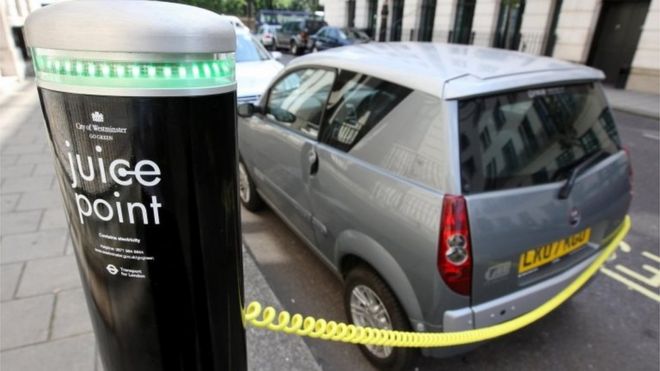
Electric Cars: Charge Points Could be Requirement in New Build Homes


New homes in suburban England would need to be fitted with electric car charging points under a government proposal to cut emissions.

Ministers also want new street lights to come with charge points wherever there's on-street parking.

Details of a sales ban on new conventional petrol and diesel cars by 2040 are also expected to be set out.

April 11, 2018

More ‘Subsidy-Free’ Offshore Wind Emerges in Europe

The Netherlands will have zero-subsidy offshore wind by 2022, but it still remains a special case.


"Subsidy-free" offshore wind is getting a lot of attention after contracts in Germany and the Netherlands were signed without direct government incentives. However, experts say these zero-subsidy offshore wind farms won't become the norm anytime soon.

Swedish developer Vattenfall won a tender to build up to 750 megawatts of offshore wind capacity in the Netherlands over the next five years, split across two adjacent sites 14 miles from the coast.

February 22, 2018

Europe Can Double Renewable Energy Share by 2030, IRENA Says


The European Union can boost the share of renewables to 34 percent of its energy mix by 2030, triggering hundreds of billions euros in investment and accelerating reduction of greenhouse gases blamed for global warming, according to the International Renewable Energy Agency (IRENA).

Lawmakers in the 28-nation bloc are currently discussing policies for the next decade, with the European Parliament calling to increase the share of renewables to at least 35 percent of energy consumption, more than level of 27 percent or more endorsed by the heads of government. That compares with 17 percent reached in 2016 as part of the EU strategy to cut pollution and increase energy security.

February 2, 2018

European Parliament Pushes for More Ambitious Renewable Energy Targets

But the parliament’s 2030 proposal still has to win out over a weaker EU Council plan.

Renewable energy groups are hoping that a 35 percent clean power target proposed by the European Parliament will prevail over a less ambitious plan put forward by the Council of the European Union that aims for 27 percent.

The 2030 target negotiations held in January saw Members of the European Parliament (MEPs) pushing for stronger objectives than those proposed by the Council, not only for renewables, but also for energy efficiency and distributed energy regulations.

January 22, 2018

EU Votes to Boost Renewable Energy Targets

European Union (EU) lawmakers have voted to boost energy efficiency and the use of renewable sources in the next 22 years.

Members of the European Parliament (MEPs) said renewable energy sources should account for 35% of total consumption by 2030, up on a 27% target proposed by the European Commission in December. National targets will be set, and member states will be able to deviate from the agreed goal by 10%. 

The EU Parliament also voted in favour of a minimum 35% binding EU energy efficiency target, and a draft law on energy efficiency was approved.

December 20, 2017

Wind in Europe — How Does It Blow?

Europe maintains a healthy market but is looking forward to fresh energy and climate ambitions to add certainty over what the post-2020 landscape will mean for new wind power.

Trade association WindEurope reports that wind power is providing over half of all new generating capacity being installed across the EU member states, with onshore providing the majority.

Some 4.8 GW of new onshore wind was installed in the first half of 2017, with the sector attracting €5.4 billion (US$6.4 billion) in new asset financing over the same period; comparable figures for the offshore sector saw 1.3 GW installed offshore, and €2.9 billion (US$3.4 billion) in financing. WindEurope predicts 2017 will be a record year for installations, with over 10 GW of new onshore wind (3.1 GW offshore) installed across the EU-28.

June 25, 2017

Global Wind Energy Insight: Offshore Breakthrough

‘A remarkable achievement,’ is the only thing I can say about where the European offshore wind industry finds itself today. It has taken a lot longer and cost a lot more money and effort than we thought back in the late ’90s, but the industry has exceeded its pricing targets by a significant margin and well ahead of the timeframe it set itself, i.e., less than €100/MWh (US$112/MWh) by 2020.

We now have another large-scale and cost-competitive renewable energy technology to add to onshore wind and solar (and of course hydro) with which to bring about the energy revolution in the power sector. Despite all the doubts that emerged over the course of the last decade as projects got larger and more expensive, and as offshore wind struggled to establish and ‘industrialize’ itself, those who have stayed the course are now in a position to reap the rewards.

May 30, 2017

Spain Seeks $4.3BN Investment to Meet EU Clean Energy Goal

Spain is seeking to lure investment of as much as 3.9 billion euros ($4.3 billion) through its biggest auction yet for contracts to supply electricity from clean-energy sources, part of an effort to meet European Union targets.

The government on Wednesday will seek bids to supply at least 2 GW and as much as 3 GW of power in time to meet the its EU goals for 2020. This is expected to cost 2.4 billion euros to 3.9 billion euros, according to estimates by Bloomberg New Energy Finance. Bidders can offer wind, solar or other forms of electricity generation so long as it’s a form of supply that doesn’t increase carbon emissions.

April 28, 2017

Poland to Miss 2020 EU Renewable Energy Target

Poland is set to miss its target of covering up to 15% of energy demand with renewables by 2020. 

Under the most favorable scenario provided by a report released by local consultancy Ecofys, new additions for solar may reach 695 GWh, while the country is expected to reach a target of only 13.8% by the end of the decade.

Poland has a reputation as Europe’s most polluting country, still relying massively on coal power production and not supporting the development of renewable energies. In confirmation of this, renewable energy consultancy Ecofys recently published a report in which it clearly says that Poland will miss its 2020 renewable energy target.

April 7, 2017

EU Backs 600-MW Kriegers Flak Wind Farm in Danish Waters

The European Commission on March 28 determined that its support of the 600-MW Kriegers Flak offshore wind farm in Danish territorial waters is in line with EU state aid rules. The commission said the project will help Denmark reduce CO2 emissions, in line with EU energy and climate goals, without unduly distorting competition.

"The Kriegers Flak offshore wind farm will help to cut carbon dioxide emissions while the support is carefully designed to avoid distorting competition in electricity markets. I'm glad to be able to approve state support for this project," Margrethe Vestager, commissioner in charge of competition policy, said in a statement.

February 22, 2017

European Commission Approves French Support Schemes for 2.6GW of Solar

The European Commission has approved French plans to develop 2.6GW of small and large-scale solar and 60MW of hydropower.

The Commission endorsed two separate solar schemes, which have a provisional budget of €8.8 billion (US$9.4 billion) over 20 years.

One scheme helps pay the feed-in tariff (FiT) subsidy to operators of small-scale solar installations (<100kW) on domestic and commercial rooftops. This will account for roughly 1.5GW installations.

January 6, 2017

SolarPower Europe Outlines Key Conditions for Fostering Solar Storage

SolarPower Europe (SPE) has published 10 policy priorities geared at facilitating expansion of solar power and energy storage within the European market.

Targeting both front-of-meter and behind-the-meter contexts, the priorities concern matters of definition, market design, and remuneration.

SPE hopes its recommendations will resonate with the European Commission as it finalizes preparation of future energy legislation for the European Union.

December 27, 2016

EC Approves Amendments to German Renewable Energy Law

The European Commission (EC) has found that Germany’s plans to support renewables through auctions are in line with EU state aid rules.

Germany introduced amendments to its clean energy bill in July this year, in order to generalize the use of tenders to support projects.

As of next January, subsidies will mainly be granted via competitive tenders.

The commission said the move will promote the steady deployment of renewable energy whilst maintaining competition in the German energy market.

October 28, 2016

Sustainable Amsterdam: A ‘Win-Win’ Post-Fossil Fuel Strategy

Convinced that a rapid transition away from fossil fuels would be a “win-win” for the city, Amsterdam officials are committed to reducing its greenhouse gas (GHG) emissions by 80–90 percent by 2050, largely eliminating reliance on fossil fuels.

Milestones include becoming a sustainable city by 2040 and slashing GHG emissions 75 percent by then relative to 1990.

City leaders recognize that achieving the 2050 goal will require broad cooperation as well as patience and perseverance. For almost a decade now, they have tried to reach out to the business sector, and civil society groups to build a broad social consensus in favor of the city’s energy and climate strategy.

February 3, 2015

Lack of Renewable Energy Policy has Cost Europe $100 Billion

Europe has wasted $100 billion by failing to create a renewable energy policy framework that could have better utilised the region’s natural resources to generate low-carbon power.

The figure was revealed in report published on the eve of the World Economic Forum in Davos, which urges policy-makers to incentivise investments that help minimise or avoid unnecessary costs.